Third Terrace
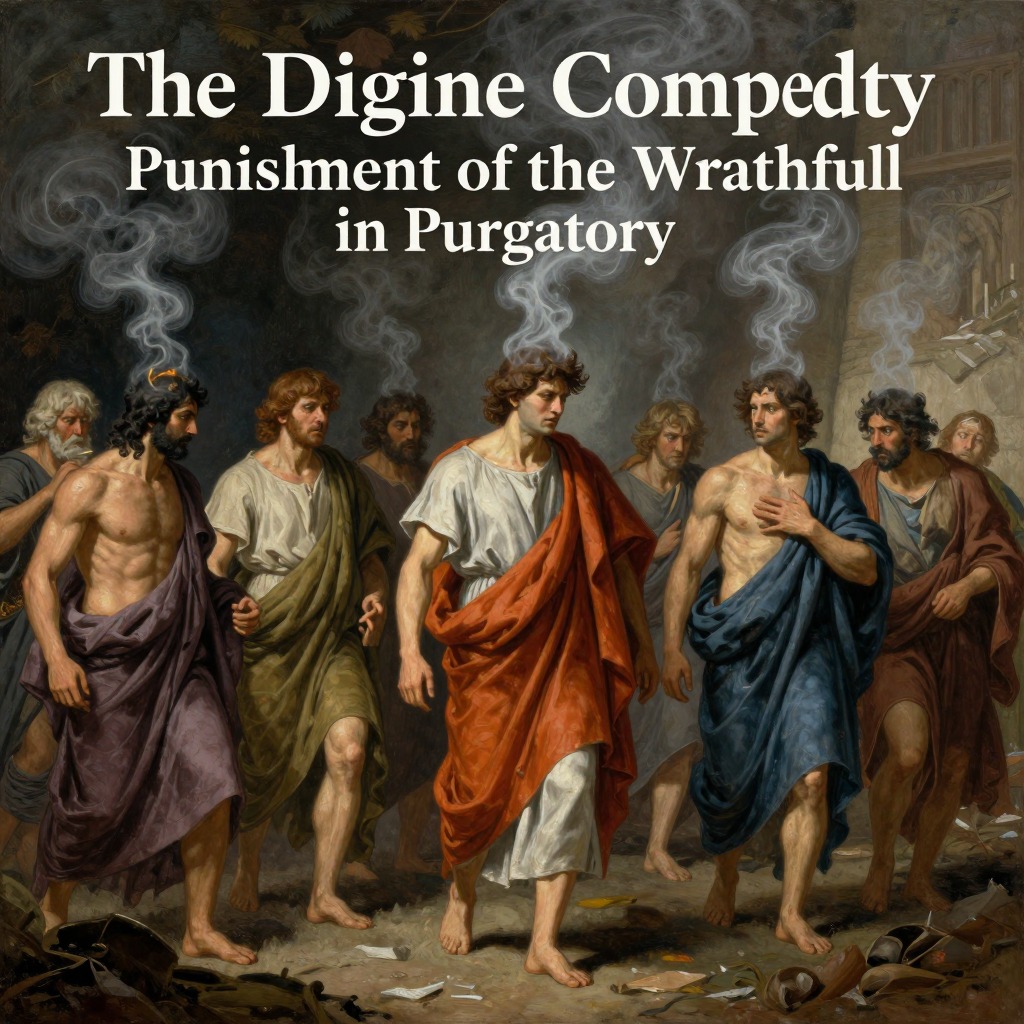
The Third Terrace of Mount Purgatory is the circle where the sin of Wrath is purged, a place defined not by fire or ice but by a dense, acrid smoke that blinds and chokes the penitent, forcing them to abandon the angry gaze and learn the meekness of the Lamb of God. It is the third of seven terraces, reached after ascending from the Second Terrace of Envy, and its purgatorial mechanism is unique: the smoke itself is the punishment, a physical manifestation of the spiritual blindness that anger produces, and the only way through it is in humble, trusting procession behind a guide.
Location and Physical Description
The Third Terrace is a circular ledge that girdles the mountain, its path cut into the rock. Unlike the marble sculptures of the First Terrace or the livid stone of the Second, this terrace is characterized by a thick, bitter smoke that envelops everything. The smoke is so dense that it deprives the penitent of sight entirely, creating a darkness more profound than any night. As Dante and Virgil ascend to this level, they find the air growing dark and acrid; the smoke is described as sombre as the night, and it robs the eyes of all vision, forcing the travelers to proceed by touch and sound alone. The terrace itself is otherwise unadorned, its only feature the suffocating cloud that fills the space from the inner wall to the outer edge.
The Punishment of the Wrathful
The penitents on the Third Terrace are those who, in life, were overcome by the sin of Wrath—anger that led to violence, resentment, or a refusal to forgive. Their punishment is to be blinded by the smoke, a contrapasso that mirrors how anger clouded their reason and moral vision in the mortal world. They move slowly through the acrid fog, unable to see, and they chant the "Agnus Dei"—"Lamb of God, who takes away the sins of the world, grant us peace"—as their prayer and their lesson. The smoke is not merely a torment but a purifying agent: it forces the penitent to abandon the aggressive, self-assertive stance of the angry person and to adopt instead the humility of one who must trust others and rely on the guidance of a leader. The penitents are described as walking in a line, each one behind the other, like blind men following a guide, and their voices are heard in harmonious prayer, a stark contrast to the discordant shouts and curses of the wrathful in Hell.
Dante's Experience and the Encounter with Marco Lombardo
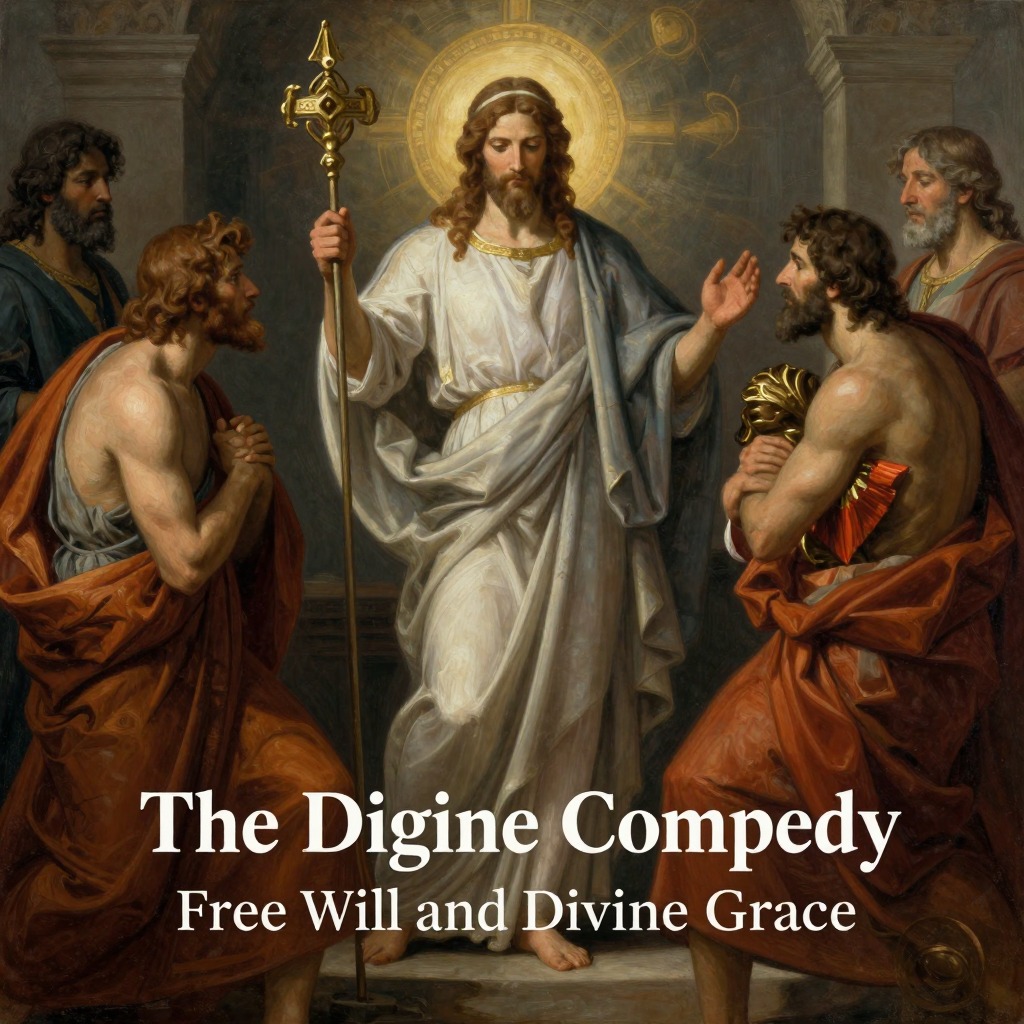
Dante and Virgil enter the smoke, and Dante, unable to see, clings to Virgil's shoulder, walking as a blind man behind his guide. Within the smoke, they encounter the spirit of Marco Lombardo, a courtier and philosopher from the 13th century. Marco, who is purging his own wrath, engages Dante in a lengthy discourse on the nature of the soul, free will, and the corruption of the world. He explains that the world's evil is not caused by the stars or by fate, but by human free will, which has been misdirected by bad leadership—specifically, the Church's usurpation of temporal power. Marco's speech is a key moment in the poem's political and moral philosophy, and it takes place within the very smoke that symbolizes the blindness of anger, suggesting that even in punishment, the wrathful can achieve clarity of thought. After his discourse, Marco points the way forward and departs, leaving Dante to continue through the purifying cloud.
Thematic Significance
The Third Terrace represents the purgation of the sin that most directly opposes the virtue of meekness and the peace of Christ. The smoke is a brilliant poetic device: it is both a punishment for the sin of anger (which blinds the soul) and a remedy (forcing the penitent to rely on faith and community rather than on their own aggressive will). The chant of the "Agnus Dei" is the central prayer of this terrace, emphasizing forgiveness, sacrifice, and the peace that comes from surrendering wrath. The terrace also serves as a setting for one of the poem's most important discussions of free will, as Marco Lombardo's speech within the smoke argues that human beings are not determined by celestial influences but are responsible for their own moral choices—a doctrine that underpins the entire structure of Purgatory as a place of voluntary purification. The Third Terrace thus transforms the blindness of anger into a path toward spiritual sight, where the soul learns to see not with the eyes of the flesh but with the eyes of the heart.